


When AI models retire – what it means for your business and the people who depend on them
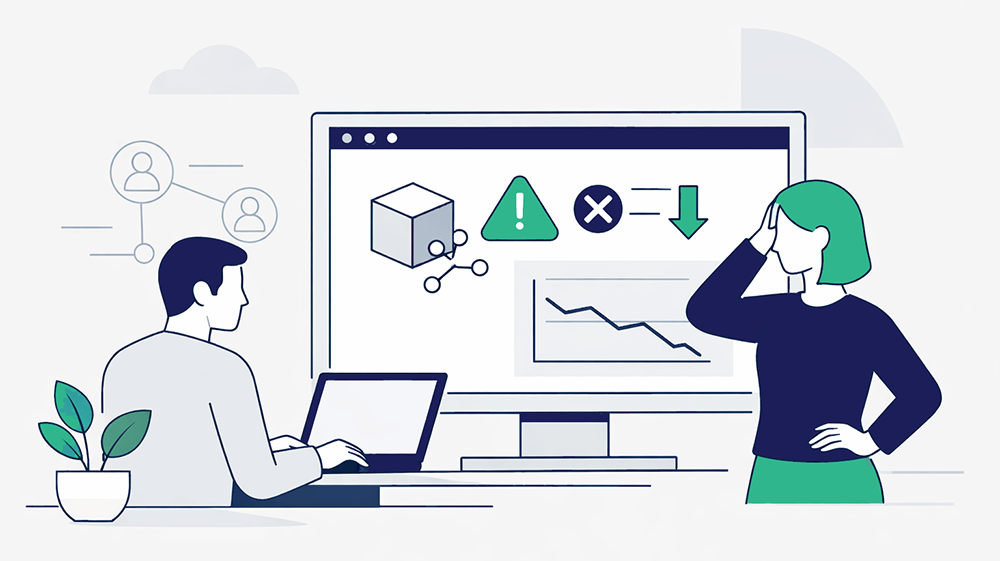
There is a quiet moment that happens in organisations all around the world. A developer opens a familiar interface, types in a query that has worked reliably for months, and receives a notice they were not expecting: the model they have built their workflow around is being deprecated. Retired. Gone.
For some, this is a minor inconvenience. For others, it is a significant operational crisis. And for the people whose jobs, decisions, and daily routines have come to depend on a particular AI model, it can feel like losing a trusted colleague they never actually met.
AI model retirement is one of the least glamorous topics in artificial intelligence, and one of the most consequential. This article explores what it actually means, why providers do it, and why the human dimension of this challenge deserves far more attention than it currently receives.
What does it mean for an AI model to be retired?
When an AI model is retired or deprecated, the organisation that built and hosted it announces that it will no longer be available after a specified date. Access via APIs closes, integration points stop working, and any product or workflow built on that model must be migrated to a newer alternative or rebuilt from scratch.
This happens for a range of reasons. Models become computationally expensive to maintain relative to their newer successors. Safety and alignment research advances, and older models may no longer meet the standards providers hold themselves to. Newer architectures offer substantially better capabilities, making it harder to justify keeping legacy systems running. And from a purely commercial standpoint, supporting multiple generations of models simultaneously is costly and complex.
The leading AI providers, including OpenAI, Anthropic, Google, and others, all operate model lifecycle policies. They typically announce deprecation well in advance, often six to twelve months, and offer migration pathways to successor models. But even with the best notice periods in the world, the disruption for organisations that have embedded these models deeply into their operations can be substantial.
A six-month migration window sounds generous until you realise the model is woven into fourteen different internal tools, three customer-facing products, and a compliance workflow that took a year to build.
Why organisations underestimate the challenge
There is a tendency to treat AI model migration as a technical problem with a technical solution: swap out one model, plug in another, update your prompts, test, deploy. Done.
In practice, it rarely works that way.
Successor models, even from the same provider, behave differently. They may have different context window limits, different default tones, different tendencies in how they handle ambiguity, and different failure modes. A prompt that reliably produced a particular format in one model may produce something subtly but importantly different in the next. In high-stakes environments, such as healthcare, legal, financial services, or regulated industries of any kind, those differences are not trivial.
There is also the matter of institutional knowledge. The prompts, configurations, and workflow designs that make an AI deployment actually useful represent significant intellectual investment. Much of that knowledge is often undocumented, held in the minds of the people who built and maintained the systems. When a model retires, that knowledge needs to be revalidated against a new system, and gaps emerge.
Then there is the question of evaluation. How do you know your migrated system works as well as the old one? Building robust evaluation frameworks takes time and expertise, and many organisations simply do not have them in place before a deadline arrives.
The human side that gets overlooked
The conversation around AI model retirement is almost entirely framed in technical terms: API compatibility, token limits, model benchmarks, migration timelines. What receives far less attention is the human experience of this transition.
Consider the customer service team that has spent months learning how to work effectively alongside an AI assistant. They know its tendencies, its limitations, the kinds of queries where it needs human oversight. They have built habits and confidence. When the model changes, that earned familiarity is disrupted. The new model may be objectively more capable, but to the people using it every day, it feels unfamiliar, less predictable, and harder to trust.
Consider the analyst who has developed a sophisticated prompting approach for synthesising research. Their methodology has been validated internally, praised by senior stakeholders, and built into team processes. A model migration can render that methodology unreliable overnight, requiring substantial rework at precisely the moment when they are also under pressure to maintain business continuity.
Technology transitions are always managed by organisations. But they are experienced by people. That distinction matters enormously.
There is also the issue of confidence and trust. When people feel confident in the AI tools they use, they engage with them more effectively and are more likely to apply critical oversight at the right moments. Frequent changes to underlying models can erode that confidence, leading to one of two equally problematic responses: over-reliance (assuming the new model works the same way as the old one without verification) or avoidance (retreating from AI-assisted workflows altogether out of uncertainty).
Neither of these responses serves organisations or the people within them well.
What good model lifecycle management looks like
The organisations that navigate AI model retirements most effectively tend to share a set of practices that go well beyond technical preparedness.
- They treat AI systems as living infrastructure
Well-managed organisations do not build AI deployments and consider them finished. They maintain documentation of what each model is being used for, how it has been configured, what evaluation criteria determine success, and which workflows are most sensitive to model changes. This is not glamorous work. It is the kind of maintenance discipline that makes the difference between a smooth migration and a crisis. - They invest in evaluation before they need it
The time to build an evaluation framework for your AI workflows is not when you receive a deprecation notice. Organisations that have clear, repeatable ways to test whether an AI system is performing to standard are dramatically better placed to validate a migration quickly and with confidence. - They communicate with their people, not just their developers
Model retirements should be communicated as organisational change events, not just technical updates. The people who use AI tools in their day-to-day work deserve to know what is changing, why it is changing, what to expect during the transition, and where to go if they encounter problems. The absence of clear communication breeds rumour, anxiety, and workarounds that can create new risks. - They build in time for relearning
A migration timeline that allocates resource only for technical integration, and nothing for the human adjustment period, is a migration timeline that will underdeliver. People need time to develop familiarity with new model behaviours, test their own workflows, and rebuild the operational confidence that sustained effective use of the previous system.
Looking ahead: building for change
AI model retirement is not going away. If anything, the pace of model development is accelerating, which means the lifecycle of any individual model is likely to shorten rather than lengthen over time. Organisations that treat each deprecation event as a surprise are going to find this increasingly difficult to manage.
The mindset shift required is straightforward in principle, though demanding in practice: AI deployments should be built with change in mind from the very beginning. That means abstracting model dependencies where possible, documenting configurations and prompts as carefully as any other piece of business-critical software, building evaluation into ongoing operations rather than treating it as a one-time activity, and creating organisational cultures where the people using AI tools feel informed, supported, and equipped to adapt.
The organisations that thrive in an AI-native world will not be those that found the perfect model and stuck with it. They will be those that learned how to change gracefully.
There is something worth acknowledging in all of this. The fact that AI model retirement is disruptive is, in a strange way, a measure of how valuable these tools have become. You do not mourn the end of something that did not matter. The frustration, the scramble, the renegotiation of workflows that model deprecation triggers, all of it reflects the genuine integration of AI into the fabric of how organisations operate and how people do their work.
That integration deserves to be taken seriously at every stage of the model lifecycle, including the end.
Frequently asked questions
- What is AI model deprecation?
AI model deprecation is the process by which an AI provider announces and implements the end of support for a specific model version. After the deprecation date, the model becomes unavailable, and any systems using it must migrate to an alternative. - How much notice do AI providers typically give before retiring a model?
Notice periods vary by provider and model, but most major providers aim to give between three and twelve months of advance notice. Organisations should monitor provider communications closely and not assume they will be personally notified. - Will my prompts still work after migrating to a new model?
Not necessarily. Different model versions, even from the same provider, can respond differently to the same prompts. Prompt engineering work should be reviewed and tested against any successor model before full migration. - How should organisations prepare for AI model retirement?
Key steps include maintaining thorough documentation of all AI deployments, building evaluation frameworks to test model performance, communicating changes clearly to all affected staff, and engaging with providers early in the migration process. - Why do AI providers retire models if they still work?
Providers retire models for several reasons: the cost of maintaining older infrastructure, advances in safety and alignment research that make newer models preferable, the superior capabilities of successor models, and the complexity of supporting multiple model generations simultaneously.
Interested in more content like this? Sign up to our Newsletter here.
How we can help
At iwantmore.ai, we specialise in helping businesses bridge the AI divide turning curiosity into capability and capability into competitive advantage.
We work with organisations to:
- Assess AI readiness: Understand where you are today across people, processes, and platforms.
- Identify high-impact use cases: Through discovery workshops and hands-on collaboration, we surface the areas where AI and automation can add the most value specific to your business.
- Design and implement practical solutions: From AI agents to process automation, we help you build solutions that deliver real business outcomes not just tech demos.
Whether you’re just starting out or looking to take your existing efforts to the next level, we’re here to guide you every step of the way.
We understand you are busy but don’t get left behind. Start your AI journey with confidence. Contact us and let’s explore what’s possible for your business.
Other AI articles you may be interested in:
AI model retirement happens when providers discontinue older systems, requiring organisations to migrate or rebuild workflows built around them. Although driven by improvements in performance, safety, and cost efficiency, these changes can cause significant disruption. Beyond the technical impact, model retirement also affects the people and teams who rely on these tools every day.
An AI mindset means embedding AI into everyday work so it becomes a natural part of how the business operates. Teams use it to streamline repeatable tasks, improve decisions, and reduce friction, while applying human judgement and clear guardrails. Built through small, practical improvements over time, this approach turns AI from an experiment into a consistent driver of efficiency and progress.
Governments across the world are racing to develop and deploy AI, but their approaches couldn’t be more different. The United States, China and the United Kingdom have all released formal action plans in 2025 that give us a clear sense of their priorities, politics and philosophies on AI. Here’s what they’re doing and what it tells us.
We say it to every business we meet. Regardless of the project, you can have the coolest, sexiest, best bit of tech out there, but without the people being on board it is a complete waste of time and money. Rolling out AI is no different. It’s about people. What’s the best way of bringing people along on any tech journey? Other people.
Artificial intelligence is hungry for energy. Behind every chatbot, Copilot, or agent are servers burning a lot of power. As more UK companies adopt AI tools, it's worth paying attention to how much energy those tools use and what that means for your sustainability targets and reporting requirements.
AI is no longer a future trend — it’s a present-day advantage. While some businesses are building AI agents and transforming operations, others risk falling behind. This article looks at what’s driving the AI divide, why foundational knowledge matters, and how even small steps can unlock real competitive value. If you’re standing still, you’re already losing ground.
iwantmore.ai – The AI consulting firm that helps you build a smarter business
Wherever you are with your AI implementation initiatives, we have a range of stand-alone AI quick start services to help you fast track the transformative benefits of AI across your business.
